
The choice between TMS and ECT for depression depends on your individual symptoms, treatment history, and medical profile. Neither treatment is universally superior. Each has distinct strengths, limitations, and ideal patient profiles. This article breaks down the key differences so you can approach your next appointment with clarity.
Transcranial magnetic stimulation is an FDA-cleared, non-invasive treatment for major depressive disorder (MDD) and other conditions, specifically designed for individuals who have not found relief from traditional treatments like medication and talk therapy. TMS was first cleared by the FDA for treatment-resistant depression in 2008 and has gained significant traction as an alternative for patients who haven’t responded adequately to antidepressant medications.
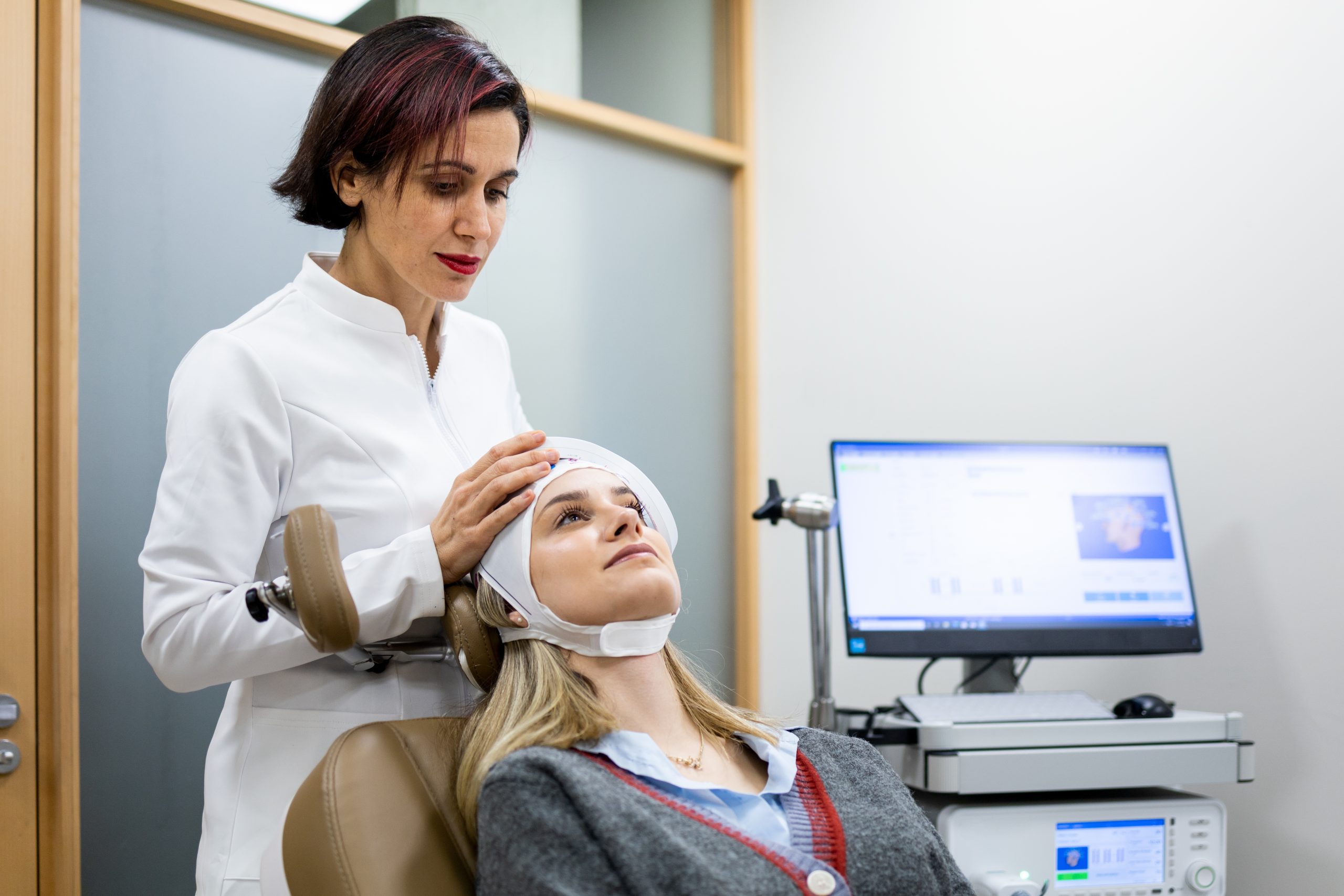
Our mental health center in Newport Beach offers TMS therapy using BrainsWay Deep TMS technology. This system uses a specialized helmet-style H-coil designed to reach broader and deeper brain structures than standard figure-8 coils, potentially engaging more of the neural circuitry involved in depression.
Key characteristics of TMS include:
Non-invasive – no surgery, no anesthesia, no sedation
Outpatient treatment – patients drive themselves to and from sessions
Minimal recovery time – most people return to work or daily activities immediately
Typically performed over 4–9 weeks, with sessions lasting roughly 20–40 minutes each
Accelerated protocols are available – 10 quick sessions every day for 5 days.
Electroconvulsive therapy is one of the oldest and most studied brain-stimulation treatments in psychiatry, dating back to the 1930s. Modern ECT bears little resemblance to early portrayals in popular culture. Today, it is a carefully controlled medical procedure performed under general anesthesia with muscle relaxants to prevent physical convulsions.
During ECT, brief electrical currents are delivered to the brain to intentionally trigger a short, controlled seizure. This seizure is believed to cause rapid changes in brain chemistry and connectivity that can reverse symptoms of severe depression, bipolar disorder, or catatonia.
Key characteristics of ECT include:
Requires general anesthesia and a brief recovery period after each session
Performed in a hospital or specialized clinical setting
Treatment course typically involves 6–12 sessions over 2–4 weeks, often given 2–3 times per week
Considered the gold standard for severe, medication-resistant depression and psychiatric emergencies, such as active suicidality or psychotic depression
Both TMS and ECT aim to change brain activity in regions linked to depression, but they use very different mechanisms.
TMS works with precision. A specialized coil placed on the patient’s head delivers magnetic pulses – similar in strength to those used in MRI – that pass harmlessly through the skull and generate small electrical currents in targeted brain tissue.
The region most often targeted for depression is the left dorsolateral prefrontal cortex (DLPFC), an area known to be underactive in people with depression. This process, known as electromagnetic induction, depolarizes neurons, making them more active.
Over a course of treatments, this repeated stimulation strengthens neural pathways and improves communication between different parts of the brain’s mood-regulating circuit. BrainsWay deep TMS employs an H-coil design that reaches deeper cortical pathways than standard coils.
ECT works more globally. The electrical stimulation affects the brain broadly rather than targeting a specific, small region. The induced seizure triggers a cascade of neurobiological changes, increasing the release of neurotransmitters like serotonin, norepinephrine, and dopamine, and potentially promoting neurogenesis (the growth of new brain cells). This broad neurochemical “reset” is why ECT’s effects can sometimes be noticed after just a few sessions, whereas TMS benefits typically build over several weeks.
Both treatments modulate brain activity, but the scope and intensity differ substantially.
Similarity: Both aim to correct dysfunctional brain activity associated with depression.
Difference: TMS uses magnetic fields to induce a small, localized pulse in a very specific part of the brain’s surface. ECT uses an externally applied electrical current to induce a generalized seizure that affects the entire brain, creating a more immediate, widespread neurochemical shift.
The day-to-day experience of receiving TMS versus ECT looks dramatically different, which is a major factor for many patients.
Similarity: Both require a series of treatments over several weeks to achieve the desired therapeutic effect.
TMS takes place in an outpatient office. You sit in a comfortable chair, remain fully awake, and can listen to music, watch TV, or talk during the session. No special preparation is needed – you eat normally beforehand and don’t need anyone to drive you home. A typical session with the BrainsWay device lasts about 20 minutes.
ECT takes place in a hospital or clinical suite equipped for anesthesia. You fast before the procedure, receive general anesthesia and a muscle relaxant, and spend time in a recovery area afterward. A companion must drive you home, and most physicians recommend avoiding work or complex tasks for the remainder of the day.
One of the most practical differences between TMS and ECT is the extent to which they interfere with daily life. Both treatments are administered and monitored by trained medical professionals, but the patient’s role during each session differs significantly.
With TMS, most people continue working, caring for their families, and maintaining their regular schedules throughout the treatment course. Sessions at Allied Psychiatry and Mental Health are scheduled during weekday office hours. The main sensation is a tapping or clicking feeling on the scalp, and the patient can ask to pause the treatment at any time.
With ECT, the patient is completely unconscious due to anesthesia and has no awareness of the procedure. The need for anesthesia, a driver, and post-procedure rest means patients often need to arrange significant time away from responsibilities. Some people also experience temporary confusion or disorientation immediately after a session, which can last for minutes to hours.
Clinical research shows that approximately 50–60% of people with treatment-resistant depression experience a meaningful improvement with TMS, and about one-third achieve full remission. These results are notable because these are patients who have already tried – and not responded to – at least one antidepressant medication. Deep TMS using BrainsWay technology received FDA clearance based on clinical trial data demonstrating significant improvements in depressive symptoms compared to a sham (placebo) treatment.
The effects of TMS are durable. Many patients who respond to the initial course of treatment remain well for a year or longer. For those who may experience a return of symptoms, maintenance TMS sessions or a shorter course of re-treatment can be highly effective. For patients dealing with depression alongside other conditions, such as anxiety or PTSD, TMS may offer additional benefits, as the prefrontal cortex plays a role in regulating a range of emotional and cognitive processes.
ECT remains one of the most effective treatments available for severe depression. Response rates are estimated at 70–90%, with many patients noticing meaningful symptom relief within the first week or two of treatment. Remission rates are also higher than in most other interventions – studies suggest 50–65% of patients achieve remission. However, its high efficacy comes with a trade-off in terms of side effects and invasiveness.
The decision between TMS and ECT isn’t always straightforward, but general clinical guidelines suggest:
TMS is often preferred when:
Depression is treatment-resistant but not immediately life-threatening
The patient wants to avoid anesthesia and hospitalization
Memory preservation is a high priority
The patient needs to maintain daily responsibilities during treatment
Prior medication trials have been inadequate, but the patient is medically stable
ECT is often preferred when:
Depression is severe, with psychotic features or active suicidality
Rapid response is medically necessary
The patient has not responded to TMS or multiple medication trials
Catatonia, or inability to care for oneself, is present
The patient has previously responded well to ECT
In many cases, TMS is tried first as a less invasive option, and ECT is considered if TMS and other approaches have not provided adequate relief.
TMS has a favorable side-effect profile compared to most depression treatments. The most common issues are mild headaches, scalp discomfort, and lightheadedness. With modern protocols and screening, TMS is extremely safe. TMS does not cause systemic side effects like weight gain, sexual dysfunction, or sedation – issues that are common with antidepressant medications. At Allied Psychiatry and Mental Health, every patient undergoes a thorough screening to ensure they are a safe candidate for treatment.
ECT’s side effects are more significant, largely due to the use of anesthesia and the induced seizure:
Memory loss – the most discussed side effect. Short-term (anterograde) memory impairment is common during the course of treatment and usually resolves within weeks. Retrograde amnesia (difficulty remembering events from before the treatment) also occurs. Some patients report persistent gaps in autobiographical memory, particularly for events around the time of treatment.
Confusion – temporary disorientation immediately after the procedure, lasting minutes to hours
Headache and muscle aches – common but generally mild, largely related to the anesthesia and seizure activity
Nausea – related to anesthesia
Fatigue – many patients feel tired for hours after each session
Modern ECT techniques, including unilateral electrode placement and ultra-brief pulse stimulation, have reduced cognitive side effects compared to older protocols, but memory concerns remain a significant consideration for many patients. ECT requires general anesthesia for every session.
A typical TMS treatment course at Allied Psychiatry and Mental Health is a straightforward and manageable process:
Initial evaluation – A psychiatric evaluation with one of our providers to determine if TMS is the right fit for your diagnosis, medication history, and treatment goals.
Mapping session – During the first appointment, the provider identifies the precise location on your scalp for coil placement and determines the correct magnetic field strength (called the motor threshold) by observing your brain’s response to test pulses.
Treatment sessions – Standard protocols involve daily sessions, 5 days per week, for 4–9 weeks (roughly 20–36 sessions total). Each session lasts approximately 20–40 minutes. You sit in a comfortable chair, the BrainsWay deep TMS helmet is positioned over your head, and you’ll hear a clicking sound and feel a tapping sensation on your scalp as the magnetic pulses are delivered. You remain awake and alert throughout.
Ongoing monitoring – Your provider tracks your symptoms throughout the course and adjusts treatment parameters as needed. Medication management may continue alongside TMS.
Post-session – You leave the office and go about your day. No recovery time is needed – you can drive, work, and socialize immediately.
A typical ECT treatment course is a more involved medical procedure:
Pre-treatment evaluation – Comprehensive medical and psychiatric assessment, including blood work, cardiac evaluation (EKG), and anesthesia clearance.
Day of treatment – You fast after midnight (no food or drink for several hours). At the treatment facility, an IV is placed, and an anesthesiologist administers a short-acting general anesthetic and a muscle relaxant.
The procedure – Once you are asleep, the psychiatrist places electrodes on your scalp and delivers a brief, controlled electrical stimulus. The resulting brain seizure lasts about 30–60 seconds. The entire procedure, including preparation and recovery, takes about 1–2 hours.
Recovery – You rest in a monitored recovery area until the anesthesia wears off (30 minutes to an hour). Temporary confusion is common. A companion must drive you home, and you will likely be advised to rest for the remainder of the day.
Treatment schedule – Sessions are usually given 2–3 times per week for 3–4 weeks (6–12 sessions total). Some patients then transition to “maintenance ECT” – less frequent sessions to prevent relapse.
Post-course monitoring – Ongoing psychiatric follow-up is essential to manage medications and monitor for relapse.
When weighing TMS vs ECT for depression, the choice depends on the individual. TMS offers a non-invasive, well-tolerated outpatient option with minimal side effects and proven effectiveness, making it a strong first choice for many people with treatment-resistant depression. ECT remains unmatched for severe, acute depression where rapid improvement is essential, though it comes with greater side effects and logistical demands.
Both treatments have strong evidence behind them, and the right choice comes from an honest conversation with a qualified mental health provider who understands your full clinical picture. If you’re considering either option, scheduling an evaluation is the most productive next step.

About the Author
Hadi Estakhri, MD - Founder
June 5, 2026